
Why Weight Loss Can Slow After the First Several Weeks — And How Strength Training May Help
You started strong. The first few weeks were encouraging — the scale moved, your clothes felt looser, energy was up. Then somewhere along the way, progress slowed or stopped. Same diet, similar workouts, same effort — but the numbers on the scale won’t budge. Sound familiar?
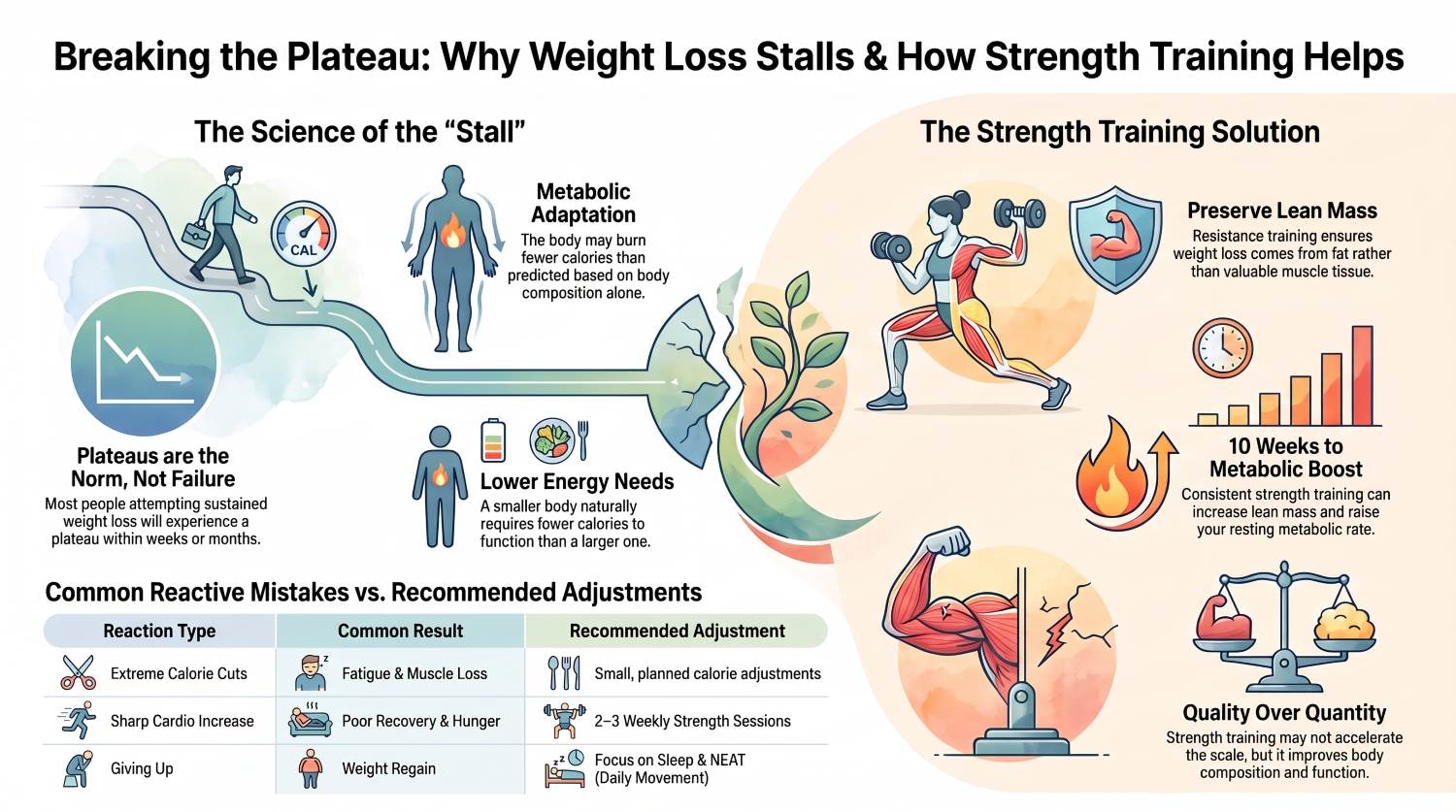
Weight-loss plateaus are common. Clinical literature published on the NCBI/StatPearls platform notes that plateaus affect the majority of people attempting sustained weight loss, and can occur weeks or months into a program. The important point: a plateau isn’t a personal failure. As body weight decreases, energy needs decrease too, and the body may gradually adapt by using less energy and increasing hunger signals. The timing and size of these changes vary from person to person.
The good news: a plateau doesn’t have to be the end of your progress. As a weight loss coach serving Syosset, Plainview, Woodbury, and surrounding communities, Hannah helps clients reassess their overall strategy — combining resistance training, general nutrition education, activity, sleep, and consistency — to help them move forward again.
What Is a Weight Loss Plateau?
Not every stall is a plateau. Weight fluctuates day-to-day based on water balance, sodium, hormones, glycogen storage, and digestive contents. A short-term stall of a few days is usually normal fluctuation. Many practitioners begin evaluating a possible plateau when weight trends remain essentially unchanged for several weeks despite consistent adherence to a plan.
Some controlled studies have found that people maintaining a reduced body weight expend meaningfully fewer calories per day than would be predicted from body composition alone, although the magnitude of this adaptation varies considerably among individuals. This phenomenon — commonly called metabolic adaptation or adaptive thermogenesis — is one of several factors that can contribute to slower progress over time.
Of people attempting sustained weight loss will experience a plateau at some point, according to clinical literature on StatPearls (NCBI Bookshelf). Timing varies from weeks to months.
Why Progress Can Slow: The Main Contributing Factors
Weight-loss plateaus rarely have a single cause. Instead, they typically reflect several factors working at once. Understanding which factors apply to you is the first step toward moving forward.
1. Lower Energy Needs After Weight Loss
A smaller body simply requires fewer calories to function. This is straightforward math — not a sign anything is broken. As you lose weight, your maintenance calories drop, so an intake that once produced a deficit may now equal maintenance.
2. Metabolic Adaptation
Beyond the expected drop from a smaller body size, some people experience an additional reduction in energy expenditure — meaning they burn fewer calories than predicted from body composition alone. Research suggests this adaptation can vary substantially between individuals, and it may change over time with weight stabilization or increased intake.
3. Changes in Hunger and Fullness Signals
Weight loss can affect appetite-regulating hormones. Many people experience increased hunger and reduced satiety during dieting, which can make consistent adherence more difficult.
4. Reduced Daily Movement (NEAT)
NEAT (non-exercise activity thermogenesis) is the energy you use during everyday activity — walking, standing, fidgeting, chores. During a calorie deficit, many people unconsciously reduce this movement, which can further narrow the gap between calories in and calories out.
5. Loss of Lean Mass
During weight loss without resistance training, a portion of the weight lost can come from lean tissue rather than fat. Lean mass — which includes muscle — plays a role in overall body function, strength, and long-term energy expenditure. Losing lean mass may reduce energy needs and make weight maintenance more difficult, but resistance training and adequate protein can help preserve or rebuild muscle over time.
6. Other Common Factors
Plateaus can also involve: reduced dietary adherence, gradual portion-size drift, inaccurate calorie estimates, medications or medical conditions, poor sleep, or increased life stress. Each of these deserves a look before drawing conclusions.
What Actually Helps: A Reassessment Approach
Because plateaus involve several factors, breaking through usually requires reassessing your overall plan rather than doubling down on one aggressive change. Clinical guidance from StatPearls emphasizes individualized strategies that can include dietary modification, exercise adjustments, behavioral interventions, and — when medically appropriate — medication or other treatments.
| Aggressive Reaction | Common Result |
|---|---|
| Extreme calorie cut | Increased hunger, fatigue, lean-mass loss, poor adherence |
| Sharp increase in cardio without recovery | Fatigue, reduced training quality, adherence issues |
| Skipping meals / prolonged fasting | May work for some, but can worsen hunger and fatigue |
| Giving up entirely | Weight regain, discouragement |
| Reassess & adjust: nutrition, activity, resistance training, sleep | More sustainable, individualized progress |
A smaller, carefully planned adjustment to calories may sometimes be appropriate after reassessing current energy needs — but extreme restriction typically backfires. Cardio can support weight management, though large increases in training volume without adequate food, protein, sleep, and recovery may increase fatigue and make consistency harder.
Where Strength Training Fits In
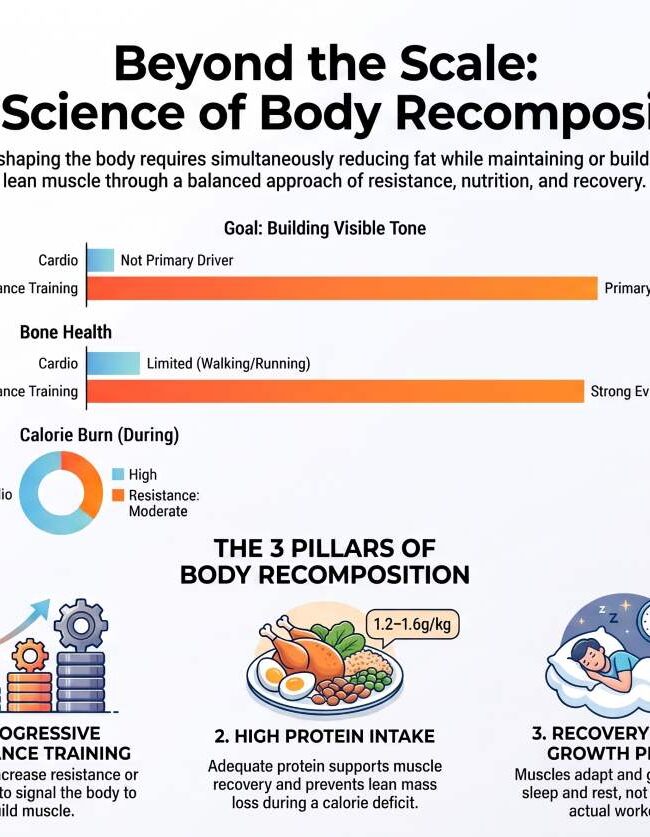
Resistance training is one of the most useful components of a comprehensive weight-loss plan — not because it’s the only thing that works, but because it addresses something diet and cardio alone often can’t: lean mass preservation.
A systematic review and meta-analysis published in the British Journal of Sports Medicine and indexed on PMC (PMC12406911) concluded that adding resistance exercise to a dietary weight-loss program produced greater fat loss and greater preservation of lean mass compared to diet alone, though the effect on total body mass was not always statistically significant. In other words: resistance training doesn’t necessarily accelerate the scale — but it may improve the quality of the weight you lose.
A widely cited 2012 narrative review by Westcott (“Resistance training is medicine,” PubMed 22777332) summarized research suggesting that approximately 10 weeks of resistance training may increase lean mass, raise resting metabolic rate, and reduce fat mass. Individual results vary, and the review is a summary of prior work rather than a new randomized trial specifically on plateau resolution.
Preservation is one of resistance training’s most well-supported benefits during weight loss. This can support strength, physical function, and long-term weight management.
Not Sure Why Your Progress Slowed?
Hannah’s coaching program combines strength training, general nutrition education, and personalized programming — with referrals to a registered dietitian or physician when individualized medical nutrition therapy is needed.
How a Training Coach Can Help
You could apply these principles on your own with enough research and discipline. In practice, most people benefit from working with a coach — not because the information is secret, but because a coach helps you filter, apply, and stay consistent. Here’s what Hannah brings to the process:
- A structured assessment. Hannah evaluates your current strength, movement quality, training history, and lifestyle factors — then designs programming that fits your reality, not a template.
- Progressive resistance training. Programming with weekly adjustments to help you continue making training progress and preserve lean mass.
- General nutrition education. Habit-based coaching within a personal trainer’s professional scope. For individualized medical nutrition therapy, Hannah refers to a registered dietitian.
- Accountability & consistency. A coach helps you stay on track when life gets busy — a large part of why coaching works.
- Injury-aware programming. Programs are adapted to work around your body — old injuries, joint concerns, and current physical capacity.
- A long-term perspective. The goal is sustainable progress that supports your health and life — not a short-term crash.
Practical Habits That Often Help When Progress Slows
- 💪Resistance training — 2–3 sessions per week with progressive adjustments
- 🥩Adequate protein — needs vary by body size, age, and activity; a registered dietitian can help identify an appropriate individual target
- 🚶More daily movement (NEAT) — walking, standing breaks, and light activity throughout the day
- 😴Consistent sleep — short sleep is associated with changes in appetite regulation and can make weight management harder
- 💧Adequate hydration — thirst can sometimes be confused with hunger
- 🔁Change the training stimulus — the same workout for many months may lead to reduced training adaptation
- 🧘Stress and recovery — stress can affect sleep, appetite, and eating behavior
- 📊Reassess energy needs — a smaller body may need a small, planned calorie adjustment; a period at maintenance can also improve adherence and energy for some people
Who Often Benefits Most from a Reassessment
- People doing mostly cardio. Adding resistance training may help preserve lean mass and improve strength.
- Long-term dieters. Repeated restrictive dieting may contribute to lower energy expenditure, increased hunger, and difficulty maintaining adherence — especially when lean mass has been lost.
- Women in perimenopause & menopause. Menopause is associated with changes in body composition, fat distribution, sleep, and activity, which can affect weight management.
- Busy professionals over 40. High stress, irregular meals, and short sleep often layer on top of other factors.
- People taking GLP-1 medications. Some lean mass is commonly lost during medication-assisted weight loss. Resistance training, adequate protein, and coordination with your prescribing physician may help preserve muscle and physical function.
Frequently Asked Questions
1. How do I know if I’ve truly plateaued or just hit a normal fluctuation?
A short-term stall of a few days is usually normal fluctuation. Many practitioners begin evaluating a possible plateau when weight trends remain essentially unchanged for several weeks despite consistent adherence.
2. Should I cut calories more if I’ve plateaued?
A small, carefully planned adjustment may sometimes be appropriate after reassessing current energy needs. Extreme cuts can increase hunger, fatigue, and lean-mass loss. Consult a healthcare professional or registered dietitian for individualized guidance.
3. Will more cardio break my plateau?
Cardio can support weight management, but adding a large amount of training without adequate food, protein, sleep, and recovery may increase fatigue and make consistency harder. Balance matters more than volume.
4. Is it too late to rebuild muscle if I’ve lost it?
Muscle can be rebuilt at essentially any age with an appropriate training program. Individual results vary based on age, health status, and consistency.
5. How long before I see progress restart?
The timeline varies. Some people notice changes in measurements, strength, or weight trends within several weeks; others require a longer period and additional adjustments.
6. I’m on a GLP-1 medication. Do I still need strength training?
Resistance training may help support muscle and physical function during any weight loss, including medication-assisted weight loss. Always coordinate exercise and nutrition decisions with your prescribing physician.
7. Does Hannah provide meal plans or calorie targets?
Hannah provides general nutrition education and habit-based coaching within a personal trainer’s professional scope. For individualized medical nutrition therapy, meal plans, or specific calorie prescriptions — especially if you have a medical condition — she refers clients to a registered dietitian.
The Bottom Line
Weight-loss plateaus are common, but they don’t follow a universal schedule. As weight decreases, the body requires less energy, may adapt by reducing expenditure, and may increase hunger signals. The good news is that a personalized plan combining nutrition, resistance training, aerobic activity, daily movement, sleep, and behavioral support can help identify and address the reason progress has slowed — and help you move forward sustainably.
Ready to Reassess Your Plan?
Serving Syosset, Plainview, Woodbury, Old Westbury, Muttontown, Jericho, Melville & Farmingdale
Certified Personal Trainer | In-Home Coaching | Strength Training & General Nutrition Education
Call: 516-254-9873 | Email: eurofit36@gmail.com
Sources & References
- Sarwan G., Rehman A. Management of Weight Loss Plateau. StatPearls [Internet]. Treasure Island (FL): StatPearls Publishing; updated 2024. (Clinical overview of weight loss plateaus, contributing factors, and individualized management strategies.) ncbi.nlm.nih.gov/books/NBK576400
- Rosenbaum M., Leibel R.L. Adaptive thermogenesis in humans. International Journal of Obesity (Lond). 2010 Oct;34 Suppl 1(0 1):S47–55. doi:10.1038/ijo.2010.184. (Foundational review on metabolic adaptation and adaptive thermogenesis following weight loss.)
- Piaggi P., et al. Early Adaptive Thermogenesis Is a Determinant of Weight Loss after Six Weeks of Caloric Restriction in Overweight Subjects. Metabolism. 2020;108:154255. (Small exploratory study; n=11; 50% caloric restriction inpatient setting.) PMC7484122
- Westcott W.L. Resistance Training is Medicine: Effects of Strength Training on Health. Current Sports Medicine Reports. 2012 Jul-Aug;11(4):209–216. (Narrative review summarizing prior research; not a randomized controlled trial specifically studying plateau resolution.) pubmed.ncbi.nlm.nih.gov/22777332
- Systematic review and meta-analysis on the effect of resistance exercise on body composition during dietary weight loss. British Journal of Sports Medicine / PMC. (Found greater fat loss and lean-mass preservation with added resistance exercise, though effect on total body mass was not always statistically significant.) PMC12406911
- EXCEL Trial (EXerCise wEight Loss). The effects of a home-based resistance training programme on body composition and muscle function during weight loss in people living with overweight or obesity: a randomised controlled pilot trial. ClinicalTrials.gov: NCT05702840. PMC12323239
- Fothergill E., Guo J., Howard L., et al. Persistent metabolic adaptation 6 years after “The Biggest Loser” competition. Obesity (Silver Spring). 2016 Aug;24(8):1612–1619. doi:10.1002/oby.21538. (Long-term follow-up on metabolic adaptation.)
- Wilding J.P.H., Batterham R.L., Calanna S., et al. Once-Weekly Semaglutide in Adults with Overweight or Obesity. New England Journal of Medicine. 2021;384:989–1002. (STEP 1 trial — clinical timeline of weight loss with semaglutide, plateau observed near ~1 year.)
- Jastreboff A.M., Aronne L.J., Ahmad N.N., et al. Tirzepatide Once Weekly for the Treatment of Obesity. New England Journal of Medicine. 2022;387:205–216. (SURMOUNT-1 trial — weight loss continued through approximately week 72.)
- U.S. Preventive Services Task Force / National Institutes of Health / Centers for Disease Control and Prevention. General public-health guidance on physical activity and weight management. health.gov/paguidelines
Note: Where article statements refer to certifications, client experience, or program outcomes, those specific claims are attributable to Hannah’s practice and are not derived from the sources above.