

Train for Function, Not Just Fitness
For adults over 55, strength training isn’t about lifting heavy for ego or following trendy gym routines. It’s about protecting your independence.
As strength declines, everyday life becomes harder: standing up, walking confidently, carrying groceries, climbing stairs, and maintaining posture. Over time, those “small” struggles can quietly reduce your mobility and confidence — and that’s when independence begins to shrink.
At Eurofit 36, Hannah (Founder and Personal Trainer) helps adults build strength safely and progressively so they can move better, feel better, and stay active for the long term.
The Real Goal: Staying Strong for Daily Life
A senior strength training program should improve the movements that matter most outside the gym.
The most meaningful outcomes include:
- Improved balance and stability while walking
- More confidence going up and down stairs
- Better ability to lift, reach, and carry
- Less fear of falling
- Better posture and smoother movement
- More energy and less stiffness
This is what strength training is designed to protect: real-life function.
Why Muscle Matters More After 55
Muscle isn’t just about appearance — it’s one of the body’s most important systems for aging well.
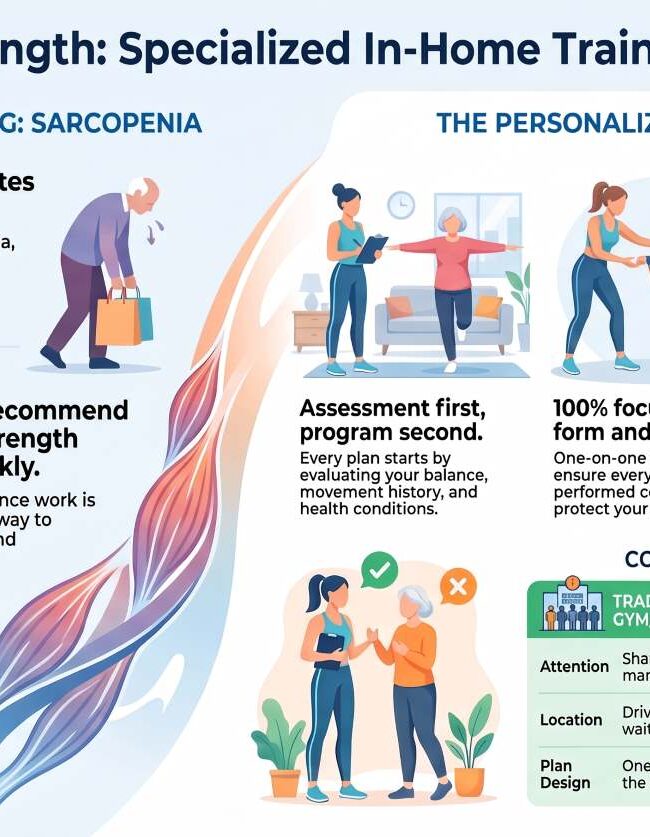
After age 55, muscle loss tends to accelerate. This impacts far more than strength alone. Reduced muscle mass can affect:
- Coordination and reaction time
- Joint stability
- Postural support
- Walking mechanics
- Metabolic health
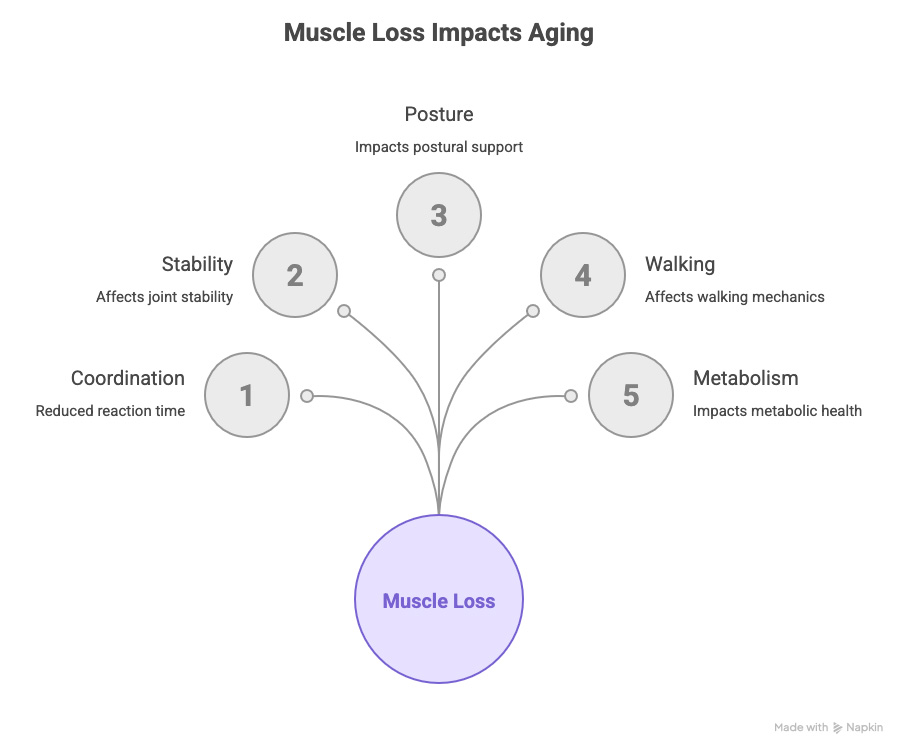
When muscle loss is left unaddressed, the risk of falls, chronic pain, stiffness, and reduced independence increases.
The good news is that strength training remains effective at any age. With consistent resistance training, the body adapts by rebuilding strength, improving coordination, and reinforcing joint support.
Balance and Fall Prevention: Why Strength Training Works
Falls are one of the most serious health risks for older adults. While balance drills can help, balance is not just something you practice — it’s built on strength and control.
Balance depends heavily on:
- Lower-body strength
- Core stability
- Coordination
- Nervous system efficiency
- Reaction speed
Strength training improves balance by strengthening the muscles responsible for stabilizing the hips, knees, ankles, and spine. This leads to more stable movement during walking, turning, stepping, and unexpected shifts.
In many cases, building strength is one of the fastest ways to improve balance.
Why Walking Alone Isn’t Enough After 55
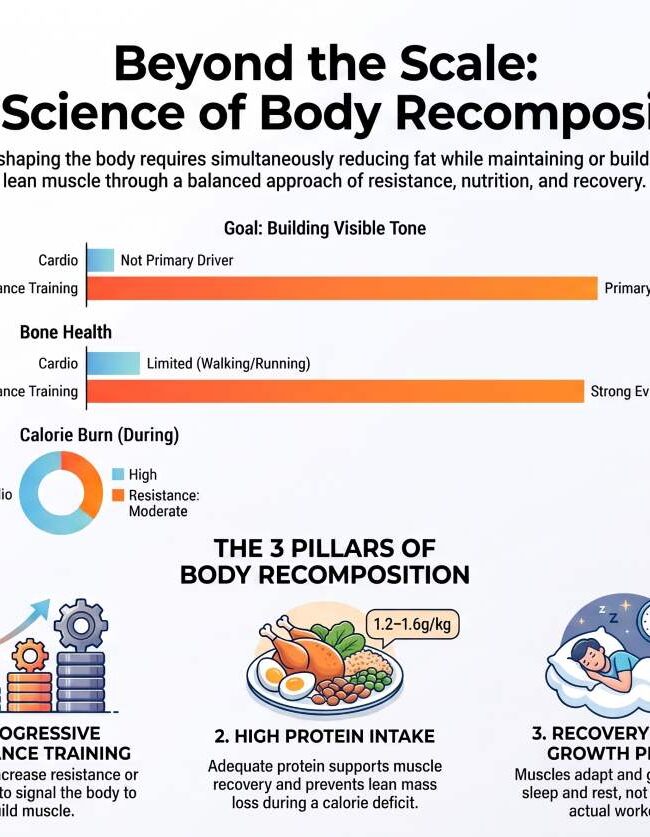
Walking is excellent for cardiovascular health, but it does not provide enough stimulus to preserve the systems most adults lose with age.
Cardio alone typically does not maintain:
- Muscle mass
- Bone density
- Joint stability
- Functional strength (sit-to-stand, stair climbing, lifting)
For adults over 55, walking supports heart health — but strength training protects independence.
The strongest long-term approach includes both, but strength training is often the missing piece.
Strength Training Can Reduce Joint Pain (When Done Correctly)
Many adults avoid strength training because they assume it will worsen arthritis or joint discomfort. In reality, properly designed resistance training often does the opposite.
Strength training supports joint health by:
- Strengthening the muscles that stabilize and protect joints
- Improving alignment and movement mechanics
- Reducing stress on cartilage and connective tissue
- Increasing usable range of motion
- Making daily movement smoother and more comfortable
When joints are supported by stronger muscles, everyday movement becomes easier and often less painful.
What Safe Strength Training Should Look Like After 55
Strength training for seniors should not look like generic gym routines or high-intensity classes.
Safe and effective training for adults over 55 should emphasize:
- Controlled movement and strong technique
- Joint-friendly exercise selection
- Gradual progression over time
- Adequate recovery between sessions
- Consistency over intensity
The goal is not maximum effort. The goal is sustainable improvement.
What a Smart Strength Program Should Include
A well-designed program for adults over 55 should focus on function first.
Key training elements often include:
- Squat and sit-to-stand patterns
- Hip hinge movements for back and hip support
- Pushing and pulling exercises for upper-body strength
- Core stability training for posture and spine control
- Mobility work for joint health
- Light coordination and balance integration
Every exercise should support real-life movement and reduce injury risk.
Why Personalized Coaching Makes a Major Difference
One of the biggest barriers for adults over 55 is not effort — it’s uncertainty.
Without coaching, many people:
- Choose the wrong exercises
- Progress too quickly
- Never progress at all
- Feel unsure about form and safety
- Stop because something hurts
Personal training solves this by ensuring:
- Exercises match your current ability
- Form is monitored for safety
- Progressions are structured and realistic
- Joint limitations are respected
- Recovery is built into the plan
At Eurofit 36, Hannah’s approach emphasizes safe progression, confidence, and consistency — which are the true drivers of long-term success.
Why One-on-One Training Is Often the Best Fit After 55
For many older adults, one-on-one training is ideal because sessions can adapt based on:
- Daily energy levels
- Joint comfort
- Recovery status
- Mobility limitations
- Movement quality
That flexibility helps clients stay consistent, avoid setbacks, and build progress safely over time.
Common Myths About Strength Training for Seniors
“I’m too old to start.”
Strength improvements can happen at any age when training is structured correctly.
“Weights will ruin my joints.”
When coached properly, strength training often improves joint stability and reduces pain.
“Cardio is all I need.”
Cardio supports heart health, but strength training is what preserves mobility, balance, and independence.
What Clients Say About Eurofit 36 (Google Reviews)
Clients often describe Hannah’s coaching as supportive, customized, and results-driven — especially for adults who want progress without pain or confusion.
Common feedback themes include:
- Workouts feel personalized and safe, even for beginners
- Clients gain strength without aggravating joints
- Clear coaching and structure builds confidence quickly
- Progress feels realistic and sustainable, not extreme
- Accountability and encouragement make it easier to stay consistent
These points summarize common feedback shared in Google reviews for Eurofit 36
Final Takeaway: Strength Protects Your Independence
Strength training after 55 is one of the most effective ways to protect your mobility, balance, and long-term independence.
By rebuilding muscle and reinforcing joint support, older adults can:
- Move more confidently
- Reduce pain and stiffness
- Lower fall risk
- Stay active and capable for years to come
With the right structure and coaching, strength training becomes safe, approachable, and sustainable — and it can dramatically improve quality of life.
FAQ’s
Is strength training safe after age 55?
Yes. Strength training is safe for adults over 55 when exercises are selected appropriately and progressed gradually. Programs should emphasize controlled movement, joint-friendly ranges of motion, and proper technique.
How often should adults over 55 strength train?
Most adults benefit from strength training 2–3 times per week. This allows enough stimulus for progress while supporting recovery between sessions.
Can strength training improve balance and reduce fall risk?
Yes. Strength training improves balance by strengthening the muscles responsible for walking and stability. It also improves posture, coordination, and reaction speed — key factors in fall prevention.
Will strength training help with arthritis or joint pain?
In many cases, yes. Strength training often reduces joint pain by improving muscle support around the joints and improving alignment and movement mechanics.
Do I need gym experience to start strength training?
No. Strength training can be safely adapted for beginners. Programs should match your current fitness level, mobility, and comfort.
Is strength training better than cardio for seniors?
Strength training and cardio serve different purposes. Cardio supports heart health, while strength training is essential for preserving muscle mass, balance, and independence. Most adults over 55 benefit from including both.
How long does it take to see results?
Many adults notice improvements in strength, confidence, and movement quality within 4–6 weeks of consistent training. Pain reduction and improved stability can sometimes occur sooner.
Can strength training help posture?
Yes. Strength training strengthens the muscles that support the spine and shoulders, improving posture and often reducing neck, back, and shoulder discomfort.
What types of exercises are best for older adults?
The best exercises are functional movements that support daily life, including squats (or sit-to-stands), hinges, pushes, pulls, carries, core stability work, and mobility-focused strength training.
Should I work with a personal trainer after age 55?
Working with a qualified personal trainer is highly recommended. Coaching ensures your plan is safe, exercises are performed correctly, and progress stays consistent without setbacks.
Ready to Get Started With Hannah?
Book your consultation with Hannah
NSCA Certified Personal Trainer
Serving: Syosset, Woodbury, Plainview, Melville, and Farmingdale
📧 Email: eurofit36@gmail.com
📱 Phone: 516-254-9873
To get started, contact Hannah
Disclaimer
This content is for educational and informational purposes only and is not intended as medical advice. Always consult your physician or qualified healthcare provider before beginning any new exercise program, especially if you have injuries, medical conditions, or concerns.
For questions regarding training services, programming, or personalized coaching, please contact Hannah directly.